
Both the indices closed at five-month highs, led by financial services, IT and metal stocks, amid persistent foreign fund inflows.

The Governor said the MPC had voted to maintain its accommodative stance, implying more rate cuts in the future if the need arises.
Growth impulses, while improving, remain fragile, and a rate hike will be disruptive to interest costs.

DBS called Rajan's decision not to seek an extension as a 'negative surprise'.
The main reason was that CPI inflation would likely remain below 4 per cent till July.
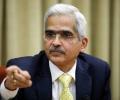
RBI governor Das flags growth slowdown, deputy raises alarm on inflation

Reversal in the declining economic growth trajectory is clearly the need of the hour and all steps should be taken to bring about this change.

The banking sector in India is reeling under Rs 8 lakh crore of non performing assets (NPAs) or bad loans, of which PSU banks alone account for over Rs 6 lakh crore.

Higher for longer' may be the narrative in the developed markets, but interest rates might not stay high for very long in India, with a section of the market expecting rate cuts to begin this year. The six-member Monetary Policy Committee of Reserve Bank of India (RBI) decided to keep interest rates unchanged at 6.5 per cent in the April review - after hiking the policy repo rate in six previous meetings. RBI Governor Shaktikanta Das emphasised that the pause was only for the April policy and that the central bank was ready to act if the situation demanded.

The sector seems set for a rally that may be somewhat temporary.

The finance ministry on Thursday raised concerns over the possible impact of El Nio conditions on India this year, saying if recent forecasts came true, the country could see lower agricultural output and higher inflation. "Some meteorological agencies predict the return of El Nio conditions in India this year. "If these predictions are accurate, then monsoon rains could be deficient, leading to lower agricultural output and higher prices," the ministry said in its monthly economic review.

The central bank had revised its inflation forecast significantly downward in the last policy
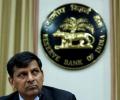
Here is some background on the candidates seen as potential successors to Rajan at the RBI

Slowdown in industrial production notwithstanding, a marginal increase in inflation raised the clamour for another round of rate cut by the Reserve Bank on April 4 to boost economic activity.

The US Federal Reserve's interest rate decision, global market trends and trading activity of foreign investors are the major factors that would dictate terms in the equity markets in a holiday-shortened week ahead, analysts said. Equity markets will remain closed on Tuesday on account of Ganesh Chaturthi. From the global front, interest rate decisions from the Bank of England and Bank of Japan would also influence market trends.

The Indian services sector activity fell to a six-month low in September, as new business inflows rose at the slowest rates since March, amid inflationary pressures and competitive conditions, a monthly survey said. The seasonally adjusted S&P Global India Services PMI Business Activity Index fell to 54.3 in September, from 57.2 in August, highlighting the weakest rate of expansion since March. For the fourteenth straight month, the services sector witnessed an expansion in output. In Purchasing Managers' Index (PMI) parlance, a print above 50 means expansion, while a score below 50 denotes contraction.

Among the Sensex firms, Bajaj Finance emerged as the biggest gainer by climbing 2.95 per cent. Tata Motors, Bajaj Finserv, IndusInd Bank, Sun Pharma, Mahindra & Mahindra, State Bank of India, Larsen & Toubro, HDFC, HDFC Bank, Maruti, Reliance Industries and Bharti Airtel were the other major winners. HCL Technologies, Axis Bank, ICICI Bank, Tech Mahindra and Titan were among the laggards.
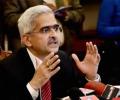
Reserve Bank Governor Shaktikanta Das has pitched for policy support from all sides -- fiscal, monetary and sectoral -- to nurture recovery of the economy hit by the second wave of the coronavirus pandemic. The dent on economic activity due to the second wave of the pandemic during April-May necessitated continuation of monetary measures to support the process of economic recovery to make it durable, Das had said while participating in the meeting of the Monetary Policy Committee (MPC) earlier in the month. "Overall, the second wave of COVID-19 has altered the near-term outlook, and policy support from all sides - fiscal, monetary and sectoral - is required to nurture recovery and expedite return to normalcy," Das said, as per the minutes of the meeting released on Friday.

They have also called for giving cash to the poor, so that demand is generated in the economy.

The government's total liabilities rose to Rs 128.41 lakh crore in December quarter from Rs 125.71 lakh crore in the three months ended September 2021, according to the latest public debt management report. The increase reflects a quarter-on-quarter increase of 2.15 per cent in October-December 2021-22. In absolute terms, the total liabilities, including liabilities under the 'Public Account' of the government, jumped to Rs 1,28,41,996 crore at the end of December 2021.
Chief Economic Advisor V Anantha Nageswaran on Thursday expressed hope that the economy will maintain the trend growth rate of 6.5 per cent and above for the rest of the years in the current decade. The economy will close the current fiscal logging in a growth of 6.5-7 per cent, he said, citing the projections of private sector analysts, Reserve Bank of India (RBI) and international agencies like OECD and the IMF. "This appears to be reasonable at this point in time although we will get the data on the fiscal second quarter in a few days, which will give more clarity on these numbers.

The banking sector is set to move at a fast pace from hereon.

Are we adopting an idea whose time has come and gone? My feeling is, yes, says ex-banker C Joseph Chacko in the fourth article of the series on inflation targeting.
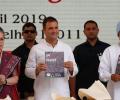
'Mrs Gandhi had nothing to do in the day-to-day working of Dr Singh's government.' 'People say Mrs Gandhi's office used to give orders, which is nonsense.'

Concerned over elevated inflation, Reserve Bank of India on Friday decided to leave the benchmark interest rate unchanged at 4 per cent but maintained an accommodative stance, implying more rate cuts in the future if need arises to support the economy hit by the Covid-19 pandemic.
There is a near consensus that at least a 25 basis points cut, if not 50, can be expected in the June policy.
The Reserve Bank may go for a final 25 basis points increase in the current rate hike cycle next week and a reduction would come in only by the end of third quarter of FY24, economists at Axis Bank said on Wednesday. As per media reports, RBI officials met economists on Tuesday, and the latter have suggested the central bank to go for a 25 basis points hike in key rates. Since May 2022, the RBI has hiked rates by 250 basis points, hurting borrowers and some are already concerned about loan tenors extending beyond their working lives as a result of the hikes.
The Reserve Bank of India is likely to cut policy rates by 0.25 per cent and keep the cash reserve ratio unchanged at its policy review next week, on the back of slower-than-expected growth and more encouraging inflation readings, says a report by HSBC.

Ahead of the 2023-24 Union Budget, the thinking at the top level of the central government is clear: Gross domestic product (GDP) growth of 6-6.5 per cent is a comfortable enough target for FY24 and the focus should be on fiscal consolidation to ensure that the sovereign cost of borrowing does not become prohibitively expensive in a high-interest rate environment, according to people in the know. Those aware of deliberations between the Prime Minister's Office (PMO) and the Ministry of Finance said while the Budget would look to strike a balance between infrastructure investment and welfare schemes, it is unlikely to be populist, though it will be the last full-year Budget before the 2024 Lok Sabha election. Incidentally, 6-6.5 per cent GDP growth is what the upcoming 2022-23 Economic Survey is expected to project for FY24.

RBI said at the current juncture, the all-out effort is to maintain and sustain, with the hope that when life is secure, resources, energy and time can be marshalled to rebuild and revive.
India's services sector activity witnessed a sharp upturn in August on the back of stronger gains in new business, ongoing improvements in demand conditions and job creation, a monthly survey said on Monday. The seasonally adjusted S&P Global India Services PMI Business Activity Index rose from July's four-month low of 55.5 to 57.2 in August, amid a quicker upturn in business activity and the sharpest rise in employment for over 14 years. For the thirteenth straight month, the services sector witnessed an expansion in output.
The Reserve Bank of India (RBI) will maintain the policy repo rate at 6.5 per cent during its upcoming June 8 announcement, considering the easing of retail inflation in April and the potential for further decline, indicating the effectiveness of previous policy rate actions, anticipate experts. Headed by Reserve Bank Governor Shaktikanta Das, a meeting of the six-member Monetary Policy Committee (MPC) is scheduled for June 6-8. The decision of the 43rd meeting of the MPC would be announced on Thursday, June 8.
Headed by Urjit Patel, MPC for the fourth straight time kept the repo rate unchanged, at which it lends to the banks, at 6.25 per cent. The reverse repo, at which RBI borrows, will be 6 per cent.
Given the pressure from India Inc and the banking fraternity, it is surmised that the portfolio rejig will take place before April.

Announcement of macroeconmic data such as industrial production and inflation, the US Federal Reserve's interest rate decision along with trends in global equities would dictate movement in the stock market this week, analysts said. Besides, foreign fund trading activity would also guide the trends in equities. "All eyes are now on the US Fed policy outcome for cues, which is scheduled on June 14. In the following sessions, the European Central Bank (ECB) and Bank of Japan (BoJ) will also announce their policy decisions.

The S&P BSE Midcap and the S&P BSE Smallcap indices added 0.5% and 0.7%, respectively

Retail inflation softened to 6.71 per cent in July due to moderation in food prices but remained above the Reserve Bank's comfort level of 6 per cent for the seventh consecutive month. With retail inflation continuing to remain high despite a fall in prices of vegetables and edible oils, among other commodities in July, the Reserve Bank of India (RBI) might go for another rate hike in September. The Consumer Price Index (CPI) based retail inflation was at 7.01 per cent in June and 5.59 per cent in July 2021. It was above 7 per cent from April to June this fiscal.
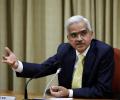
Reserve Bank Governor Shaktikanta Das on Wednesday said the country is at the doorstep of economic revival on the back of accommodative monetary and fiscal policies being pursued by the central bank and the government.

'Government of India has the right to give directions to RBI'.

EPS has had its way on most things, alliance-wise. A week earlier, he reiterated that he would not re-admit OPS and Sasikala Natarajan back in the party. It was a message not just to detractors in the AIADMK. It was even more so for the BJP leadership in Delhi. Even more important for the AIADMK was their demand for accepting EPS as the chief ministerial candidate of any alliance that the party would form, observes N Sathiya Moorthy.
